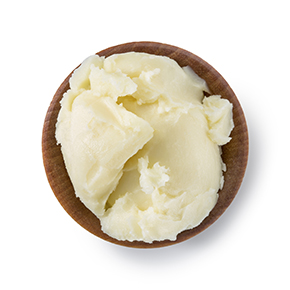
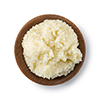
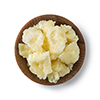
Vegetable Butters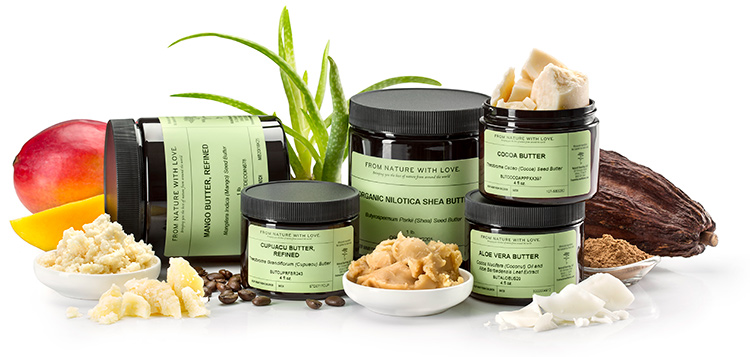 Vegetable Butters are moisturizing, help protect the skin, are rich in beneficial nutrients and are well suited for inclusion within skin/hair care, aromatherapy, spa, cosmetic and massage formulations. Butters contribute to the viscosity and stability of emulsions. They provide rigidity to lip and body balms, lotion bars and other stick products. Vegetable Butters are obtained by blending the nutritive natural fatty fractions of a vegetable oil. Depending on the butter, the fractions come directly from either the oil or hydrogenated oil or the unsaponifiable fraction. Vegetable Butters are solid at room temperature. The percentage of the unsaponifiable fraction of a vegetable oil is usually very low. It requires a large quantity of processed oil to yield a significant quantity of butter. Butters can melt during shipment. This is most common during the summer months or in warmer regions, but it can happen during cooler months as well. Vegetable butters should become solid again within a few hours (or sometimes days, depending on the butter) if stored at room temperature.
From Nature With Love offers a growing selection of organic vegetable butters for use within your finest skin care products.
|




Do You Have Product Questions?
Our goal is to empower every customer with the knowledge needed to make informed and confident product decisions.

Clicking the button above should open your email application.
If it doesn’t, you can reach us directly at productsupport@fromnaturewithlove.com.



“I just wanted to say that I LOVE your products and thank you for your excellent customer service!!!”
“Thank you sooooo much! I just wanted to say that I LOVE your products and thank you for your excellent customer service!!! I especially love the superior products. This, as a small business owner, is very helpful to me.”
Lynn Turner, Baltimore, MD